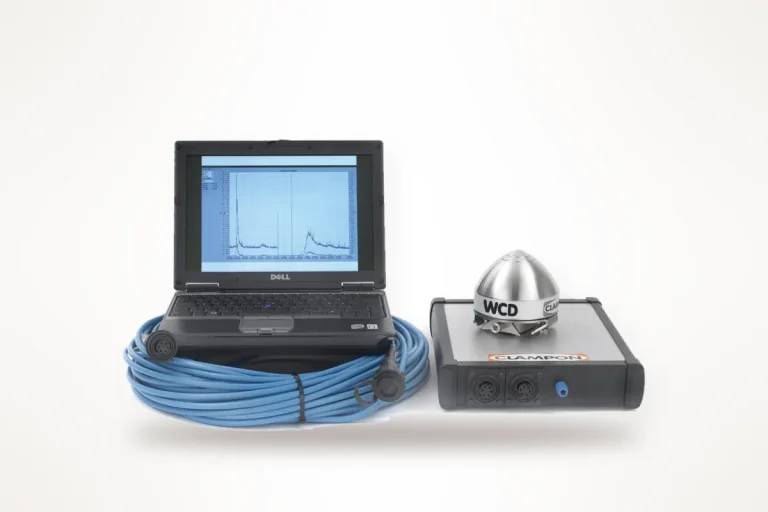
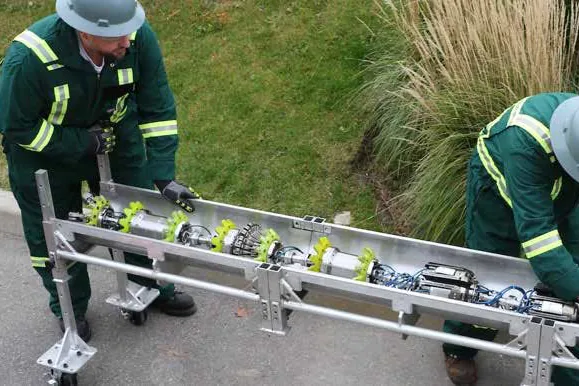
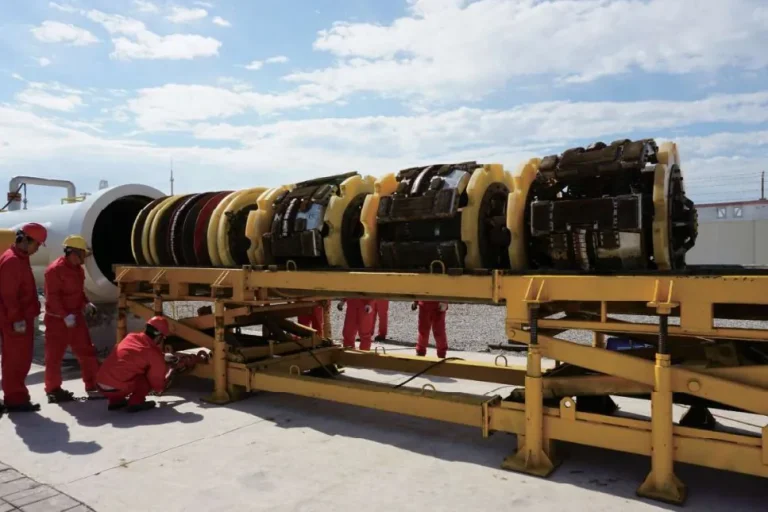
A spot thickness reading can miss the one patch of pipe that is actually thinning. ClampOn CEM corrosion erosion monitoring watches a whole section of pipe instead, in real time and without opening the line.
Corrosion and erosion cost industry hundreds of billions of dollars every year and threaten people, the environment and production. PT Saka Nusa Persada supplies the ClampOn Topside CEM® in Indonesia as a ClampOn distributor. You can also read more at ClampOn.
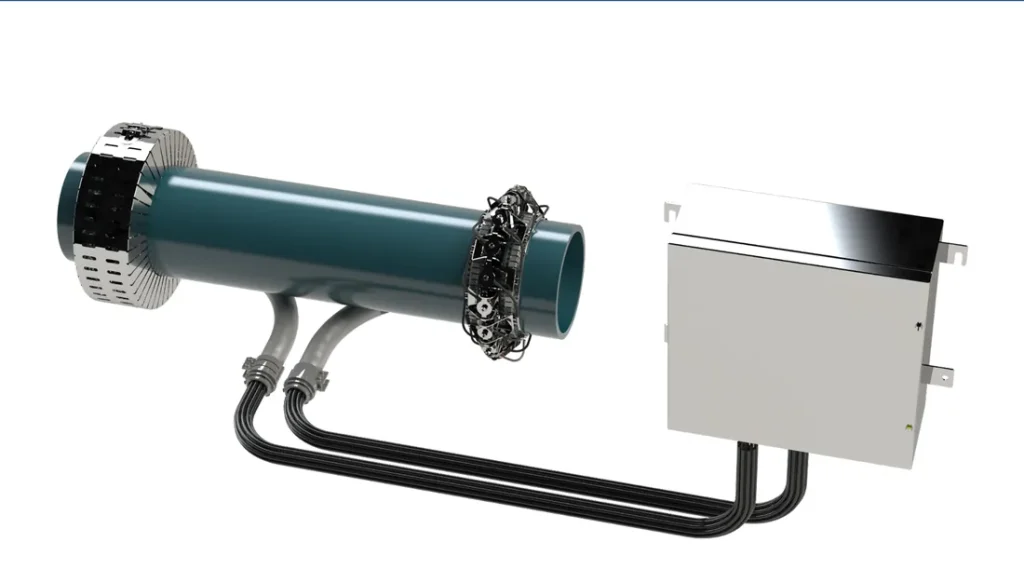
How CEM Corrosion Erosion Monitoring Works
The CEM uses active ultrasound and acoustic guided Lamb waves. First, between two and thirty-two EMAT transducers sit on the pipe surface, and a clamp-on control unit continuously sends and receives guided waves between them. As a result, a grid of measurement paths covers the selected area. Then, tomography reveals the actual and minimum wall thickness and builds a 3D view of the monitored section.
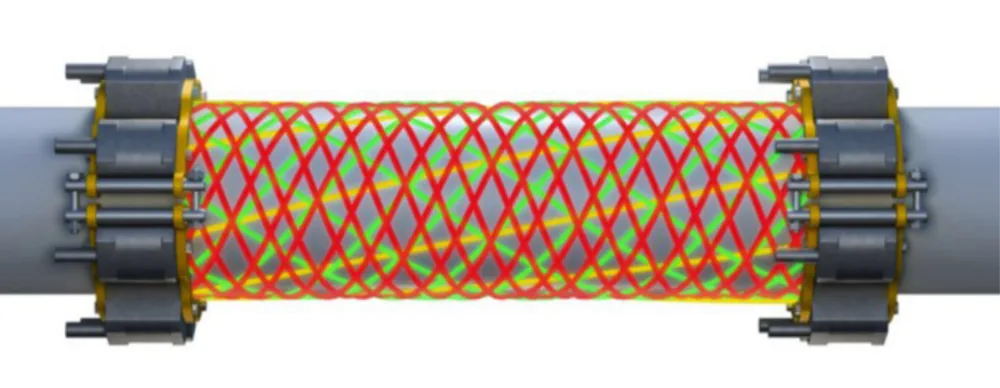
Key Advantages
- Area coverage, not spot readings, so localized corrosion or erosion does not slip through.
- High resolution: it measures wall thickness changes as small as 0.1% in real time.
- Non-intrusive and retrofit-installable, because the transducers clamp to the outside of the pipe.
- Virtually maintenance-free: there are no moving parts and no recalibration after installation.
- Reaches hard-to-inspect areas, especially when you place the transducers carefully.
Where Corrosion Erosion Monitoring Pays Off
Typical locations include bends and tees downstream of chokes, sand-producing flowlines and lines that are hard to reach for manual inspection. In addition, continuous data helps you set inspection intervals more accurately and run the asset more safely. The CEM can work as a standalone station with internal logging or feed live data into your existing systems.
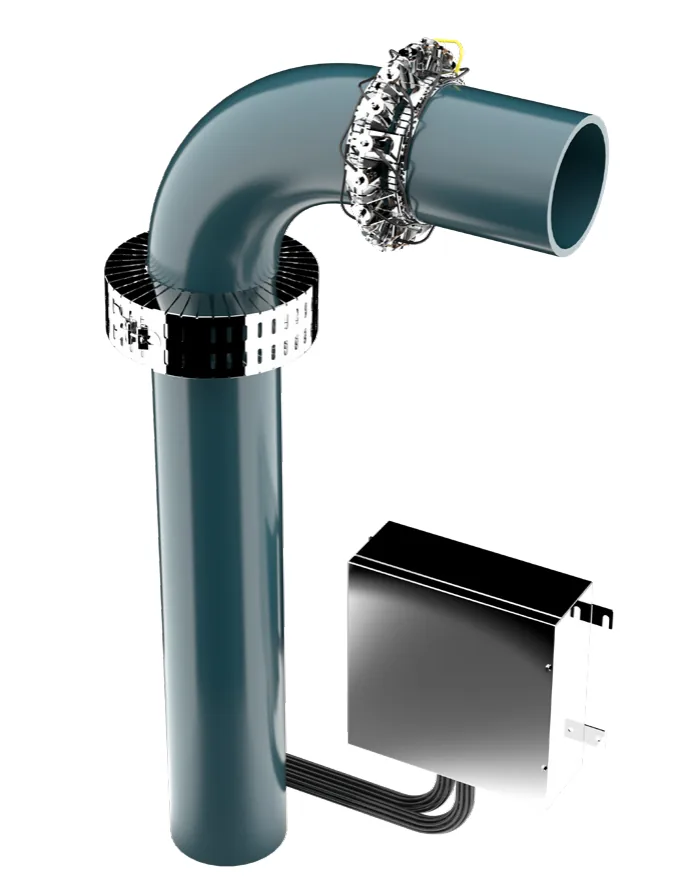
CEM Specifications
| Method | Active ultrasound, guided Lamb waves, EMAT transducers (4 to 32) |
| Sensitivity | 0.1% wall thickness change; repeatability better than 1% |
| Wall thickness range | 8 to 50 mm |
| Minimum pipe OD | 114 mm (4 inch), with no maximum diameter limit |
| Coverage | Up to 3 m², typically a pipe section of 2–5 × OD |
| Pipe temperature | −40 °C to +180 °C |
| Communication | Serial and Modbus, as well as Ethernet and OPC |
| Hazardous area | ATEX/IECEx Zone 1 and 2 (Ex eb mb IIC), cULus Class I Div 2 |
| Power and design life | 6.5 W in operation (4.5 W standby), and also a 25-year design life |
Specifications follow the ClampOn brochure (February 2021) and datasheets (January 2019) and may change without notice.
Pair the CEM with a ClampOn sand monitor to see both the cause and the effect of erosion. When wall loss needs action, our team also delivers composite pipeline repair.
Explore the full ClampOn sensor range available in Indonesia through PT Saka Nusa Persada.
Worried about erosion at a choke, bend or tee? Request a technical assessment We will size a CEM layout for the section you need to watch.