Sacrificial anode vs ICCP is one of the first decisions in any cathodic protection design. Both stop corrosion on buried and submerged steel, yet they work differently, cost differently and suit different assets.
This guide compares the two methods side by side. In addition, it lists the questions to answer before you choose, so the system protects your asset for its whole design life.
How Cathodic Protection Works
Corrosion is an electrochemical reaction. Cathodic protection (CP) turns the protected steel into the cathode of an electrochemical cell, so the corrosion reaction shifts away from the asset. To achieve this, a protective current must flow from an anode, through the soil or water, onto the steel surface.
The two methods differ only in where that current comes from. Therefore, the right choice depends on how much current the structure needs and how practical a power supply is on site.
Sacrificial Anode Systems (SACP)
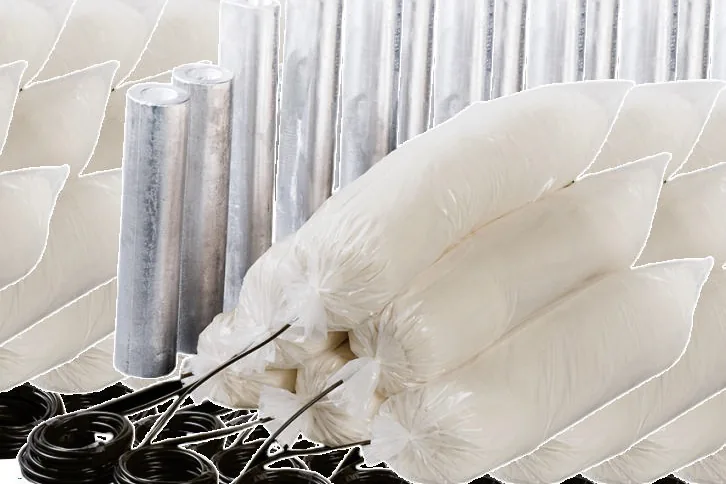
In a sacrificial, or galvanic, system, anodes made of magnesium, aluminium or zinc corrode in place of the structure. Because the anode metal is more active than steel, it supplies the protective current by itself, without any external power.
- No power supply, so the system suits remote sites without electricity.
- Simple installation, especially with pre-packaged magnesium anodes on buried pipelines.
- Low risk of interference, because the driving voltage is small.
- Limited output, therefore large or poorly coated structures may need many anodes.
Impressed Current Systems (ICCP)
In an impressed current system, a transformer-rectifier drives a controlled current through long-life anodes, for example MMO or ruthenium-coated titanium. Because the output is adjustable, one system can protect a very large structure.
- High, adjustable output, so one system covers long pipelines and large tank farms.
- Long-life anodes, because MMO anodes are consumed very slowly.
- Needs power and maintenance, for example rectifier checks and periodic surveys.
- Interference must be managed, especially near other buried structures.

Sacrificial Anode vs ICCP at a Glance
| Aspect | Sacrificial anodes | ICCP |
|---|---|---|
| Power source | None, because the anode metal drives the current | Transformer-rectifier |
| Typical assets | Buried pipelines, buried tanks, medium-sized structures | Long pipelines, tank farms, jetties, offshore platforms |
| Output | Limited, so coating quality matters a lot | High and adjustable |
| Maintenance | Low, although anodes need replacement at end of life | Regular rectifier and potential checks |
| Interference risk | Low | Higher, therefore surveys are essential |
Sacrificial Anode vs ICCP: Questions to Answer First
- First, how large is the structure, and what is the quality of its coating?
- Next, what is the soil or water resistivity along the route?
- Then, is reliable power available at the right locations?
- In addition, are there other buried pipelines or structures nearby that could suffer interference?
- Finally, what design life and protection criteria does the project specify?
The answers come from a proper survey and a current requirement calculation. Standards such as ISO 15589-1 and NACE SP0169 cover both methods. Moreover, a typical criterion keeps protection potentials within roughly −850 mV to −1,200 mV, so the steel is protected without over-protection.
Verifying That the System Works
Designing the system is only half the job. Afterwards, regular measurements confirm that every section of the structure stays protected. For pipelines, close interval potential surveys and DCVG surveys find under-protected areas and coating defects along the route.
Sacrificial Anode vs ICCP Materials from One Partner
PT Saka Nusa Persada supplies KIG TECH cathodic protection materials, including magnesium, aluminium and zinc anodes, MMO anodes, transformer-rectifiers, test stations and reference electrodes. In addition, our team provides CP installation and CIPS and DCVG surveys. For industry guidance on corrosion control, visit AMPP.
Not sure which method suits your asset? Request a technical assessment We will review your structure, soil and power situation and recommend a CP design.