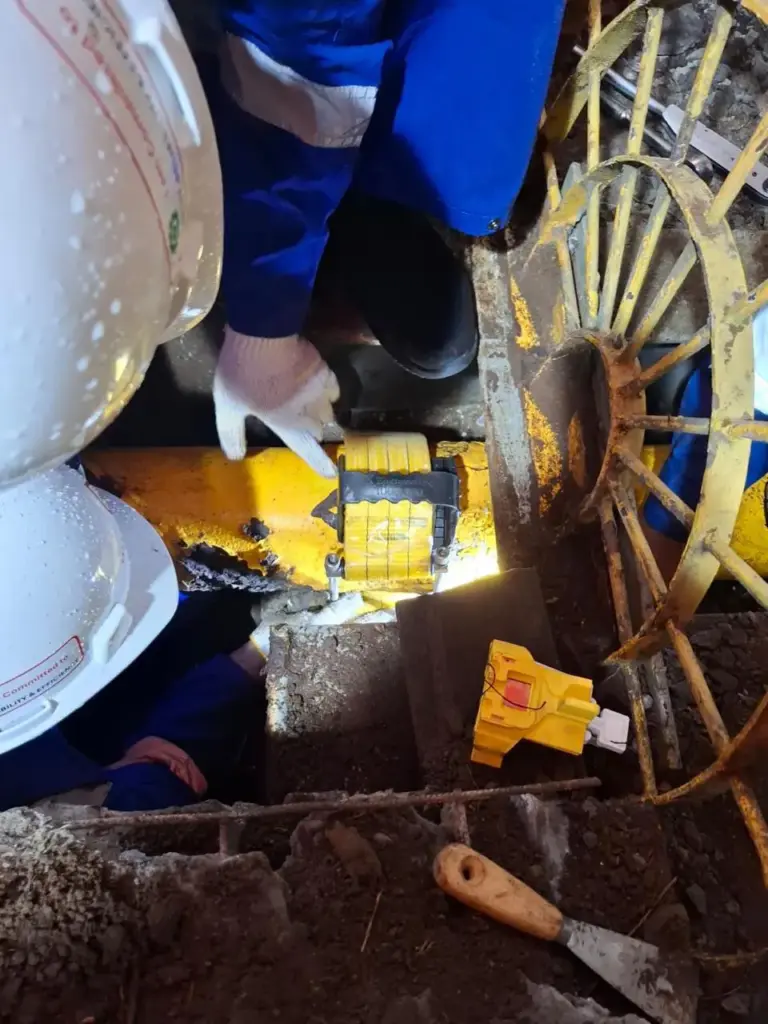
A buried pipeline can look perfect on paper while its coating fails underground. That is why operators schedule a CIPS and DCVG survey.
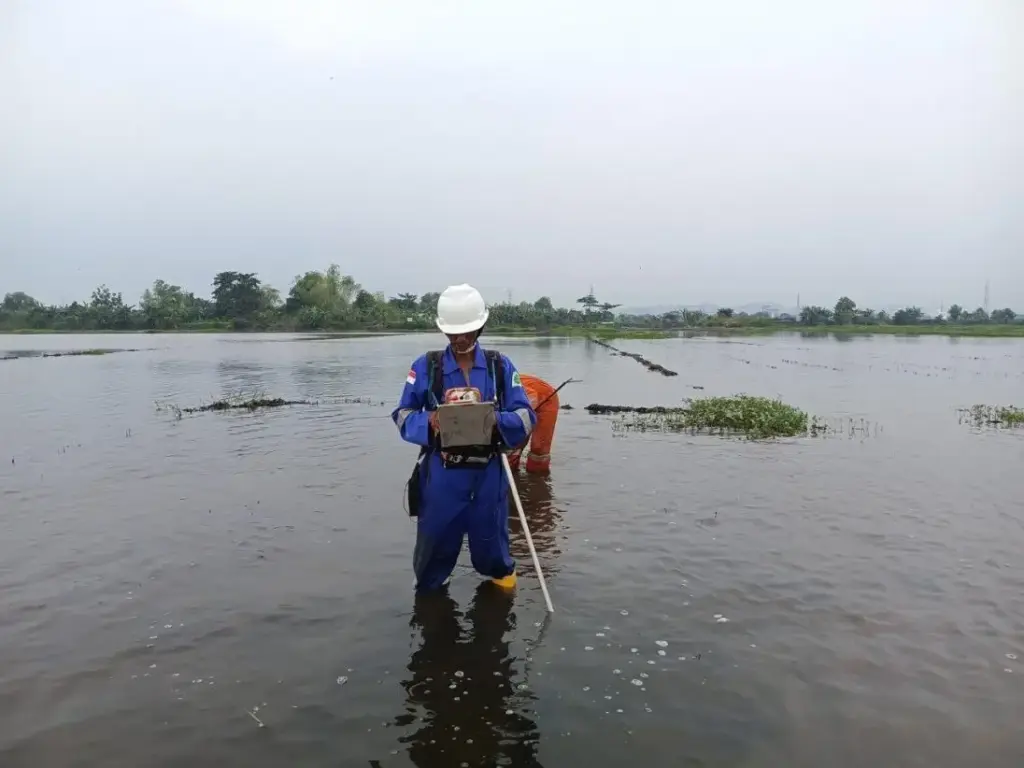
Our team performs Close Interval Potential Surveys (CIPS) and Direct Current Voltage Gradient (DCVG) surveys across Indonesia. Together, they show whether your cathodic protection works and exactly where the coating needs repair.
Why a CIPS and DCVG Survey Matters
- Detect coating defects before corrosion becomes a leak.
- Evaluate CP effectiveness, so you know which sections are under- or over-protected.
- Identify corrosion-prone zones, especially in wet, swampy or coastal soil.
- Target repairs precisely; as a result, rehabilitation costs stay under control.
CIPS: Close Interval Potential Survey
CIPS measures the potential between the pipeline and the soil at close intervals of 1–2 metres along the route. Consequently, it maps protection levels continuously instead of only at test posts.
DCVG: Direct Current Voltage Gradient
DCVG measures voltage gradients on the soil surface. Therefore, it locates coating holidays and disbondments and ranks the severity of each defect.
Both methods are non-intrusive, so the line stays in service throughout the survey. In addition, combining them gives a holistic picture: CIPS shows where protection is weak, while DCVG shows why. As a result, you can plan rehabilitation by priority instead of re-coating whole sections.
What Your CIPS and DCVG Survey Report Includes
- Route maps with GPS coordinates
- On/off potential profiles
- Defect severity ranking
- Repair and CP improvement recommendations
- GIS-ready data for integrity records
Standards We Follow
We work in line with NACE SP0502, ISO 15589-1 and ASME B31.4 and B31.8, as well as SKK Migas and K3LL requirements. In addition, our instruments are calibrated regularly. For background on survey practice, see AMPP.
Found weak protection? Our cathodic protection installation team can upgrade the system, and our coating team can repair defects.
When did you last survey your buried lines? Request a technical assessment, and then we will plan a CIPS and DCVG survey for your pipeline.