Every cleaning pig promises a cleaner line, steadier flow and better data from your next inspection. The real difference lies in choosing the right one for your deposits, your bends and your diameter changes.
PT Saka Nusa Persada supplies the full Girard Industries range across Indonesia, from soft foam Polly-Pigs to aggressive steel mandrel brush pigs. Girard has focused on pipeline cleaning since 1968, when it began making the polyurethane foam cleaners now known worldwide as Polly-Pigs. You can also browse the manufacturer’s catalog at Girard Industries.
What Is a Cleaning Pig?
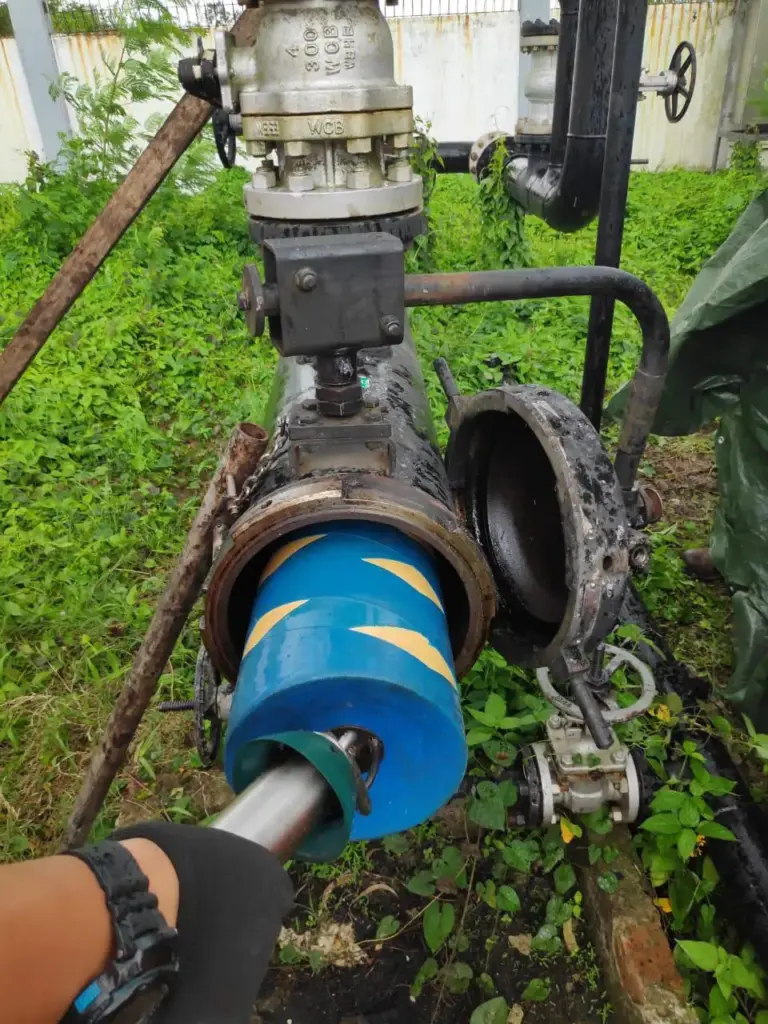
A cleaning pig is a device that travels inside a pipeline, pushed by the product or by water, air or nitrogen behind it. As it moves, its cups, discs, foam body or brushes scrape the pipe wall. Consequently, wax, scale, sand, water and other debris travel ahead of the pig to the receiver, where your crew removes them.
Regular cleaning runs protect throughput and reduce the risk of corrosion under deposits. In addition, a clean bore is the first step before any intelligent pigging or in-line inspection run.
The Girard Cleaning Pig Range
Foam Cleaning Pig Models (Polly-Pigs)
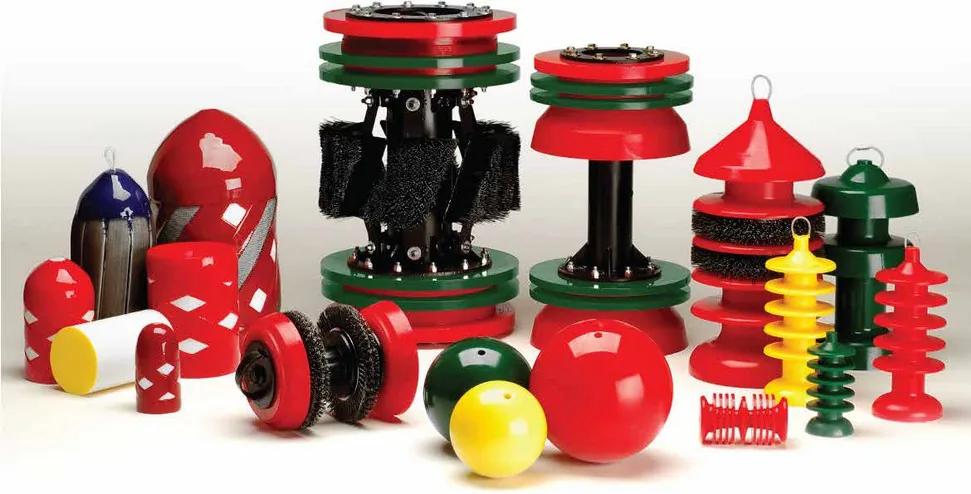
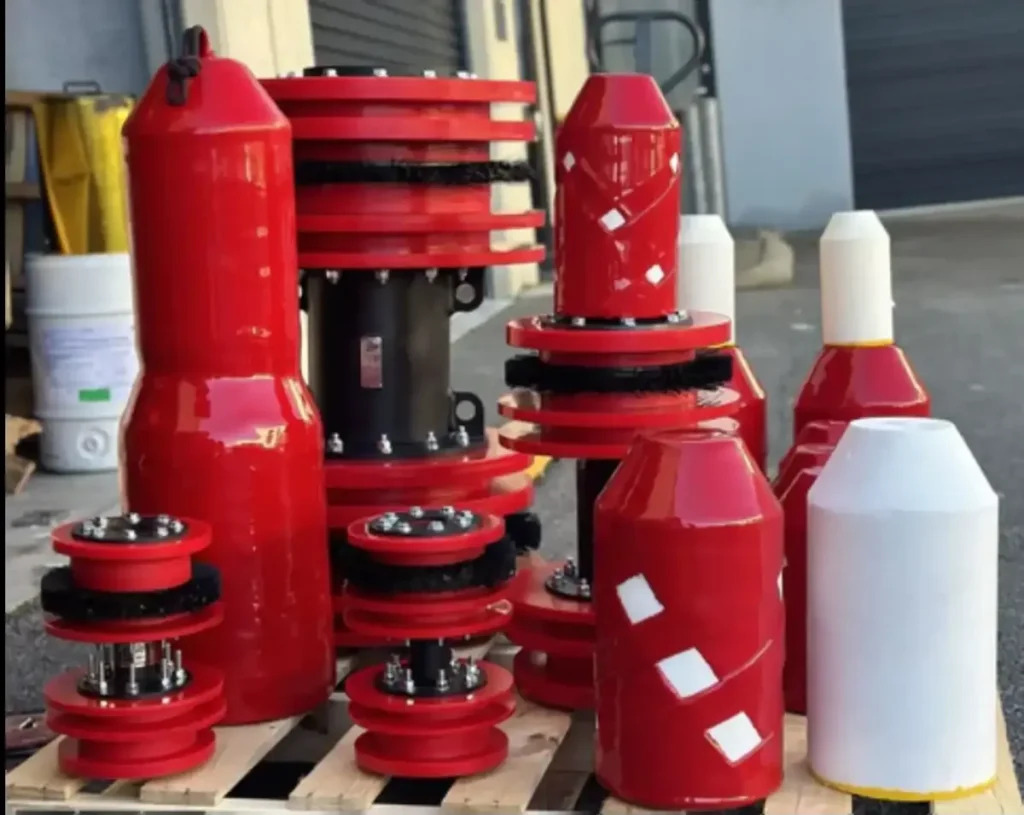
Girard Polly-Pigs use open-cell polyurethane foam in light, medium and heavy densities. Because foam compresses, these pigs negotiate tees, elbows and multiple diameter changes that stop other pigs. With more than 28 models, the range covers light cleaning and drying as well as heavy scale removal.
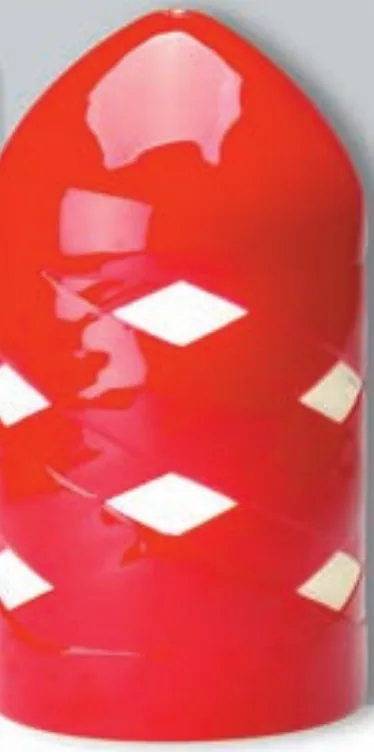
- Criss-Cross Polly-Pig: a coated foam pig for general cleaning, so it is a common first choice.
- Bare Swab: an uncoated foam pig, therefore well suited to line proving and drying.
- Double Dish Polly-Pig: designed for bi-directional runs, for example in short or looped lines.
- Wire-brush and Maxi-Brush: medium or heavy density foam with wire brushes, especially for rust and scale.
- PlaSteel: non-metallic brushes, so it cleans plastic and internally coated pipe without damage.
- Foam Disc Pig: multiple discs for more wall contact, thus highly effective at removing liquids.
Steel Mandrel Cup and Disc Pigs
A steel mandrel pig carries polyurethane cups and discs on a bolted steel body. As a result, crews replace worn cups and discs instead of the whole pig. Girard offers conical cup (GCC), scraper cup (GBC) and six-disc bi-directional (GBDX6) configurations. In addition, you can add brushes, magnets, gauge plates and transmitter housings.
Brush Cleaning Pig Options for Hard Deposits
When deposits are hard, a brush pig does the heavy work. For example, the GWWC with double-knotted wire wheel brushes is the most aggressive Girard design for 4 to 16 inch lines. For larger lines, the GBDX6-BR with leaf-spring Z brushes takes over from 16 up to 60 inch. Meanwhile, ring brushes give full 360-degree wall contact for bi-directional work, and cantilever brushes follow significant diameter changes.
Solid-Cast Pigs: Turbo-Magnum and Turbo-Flex
Turbo-Magnum is a one-piece, all-polyurethane pig with three or four cups. Its hollow center flexes through tight-radius bends, so it suits cleaning, batching and liquid removal in gas systems from 2 to 30 inch. Turbo-Flex combines cups and discs in one casting and covers 2 to 36 inch. Furthermore, its hollow center expands under pressure to keep the seal tight. Both come in three durometers for most sizes, and both accept wrap-around brushes for hard deposits.
Spheres, Replacement Cups and Discs
Girard also makes inflatable polyurethane spheres for 6 to 42 inch lines and solid spheres for 2 to 4 inch, for both pipeline and meter proving. Likewise, replacement cups and discs from 2 to 56 inch fit most pigs on the market, so one supplier can keep your existing fleet running.
How to Choose the Right Cleaning Pig
No single cleaning pig suits every line. Therefore, we start with four questions: what you need to remove, how the line is built, how much of the bore you can trust, and how you will track the pig. The table below gives a quick starting point.
| Unknown line condition | Light-density foam pig first, because it passes restrictions safely and shows what the line holds |
| Wax, sludge and loose debris | Criss-cross foam pig or Turbo-Magnum, so the coating or cups scrape the wall |
| Hard scale, rust or mill scale | GWWC or GBDX6-BR brush pig, or a Maxi-Brush foam pig, especially after softer runs |
| Liquid hold-up in gas lines | Foam Disc Pig, Turbo-Flex or Turbo-Magnum, because their seal sweeps liquids out |
| Tees, tight bends, diameter changes | Foam Polly-Pig or a cantilever brush pig, since both follow changes in the bore |
| Plastic or internally coated pipe | PlaSteel foam pig with non-metallic brushes, so the lining stays intact |
| Bore check before inspection | Mandrel pig with a gauge plate first, and then your in-line inspection tool |
Progressive Pigging: Start Soft, Then Step Up
On a line that nobody has pigged for years, an aggressive pig can stall against a thick deposit. Instead, experienced operators follow a progressive program:
- First, run a light foam pig to prove the line and gauge how much debris comes out.
- Next, step up to medium or heavy foam, or to a criss-cross coated pig, as returns fall.
- Then, introduce cup, disc or brush pigs once softer pigs pass freely.
- Finally, repeat until the debris at the receiver drops to an acceptable level.
This approach lowers the risk of a stuck pig. Moreover, the debris from each run shows how fast the line fouls, so you can set the right cleaning pig frequency for maintenance.
Why Choose a Girard Cleaning Pig?
- One family for every campaign: foam, mandrel, brush and solid-cast pigs plus spheres, so one supplier covers commissioning to maintenance.
- Over 28 foam-pig models: therefore you can match density, coating and brushes to each line.
- Sizes from 2 up to 60 inch: including extended lengths, ropes, cables and magnets on request.
- Ready for pig tracking: because most Polly-Pigs and the hollow solid-cast pigs accept transmitters.
- Spare cups and discs: for most pigs on the market, so your existing mandrel pigs stay in service.
- Decades of focus: in fact, Girard has concentrated on pipeline cleaning since 1968.
Girard Product Overview
| Foam pigs (Polly-Pig) | Light, medium and heavy density; 28+ models, including bare, criss-cross, brush and disc styles |
| Steel mandrel pigs | GCC, GBC and GBDX6 cup and disc designs, plus optional brushes, magnets and gauge plates |
| Brush pigs | GWWC for 4–16 inch and GBDX6-BR for 16–60 inch, as well as ring and cantilever brushes |
| Solid-cast pigs | Turbo-Magnum 2–30 inch and Turbo-Flex 2–36 inch, mostly in three durometers |
| Spheres | Solid 2–4 inch and inflatable 6–42 inch, for both pipeline and meter proving |
| Cups and discs | 2–56 inch scraper, conical, guide, sealing and multi-diameter designs |
Typical Applications
- Commissioning: removing construction debris, and then drying new pipelines
- Routine maintenance pigging of oil, gas, water and product lines
- Removing liquids from gas pipelines, so throughput stays high
- Batching and product separation between different products
- Cleaning before intelligent pigging and in-line inspection
- Meter proving, especially with Girard spheres
Cleaning Pig FAQ
How often should I run a cleaning pig?
It depends on the product, the flow rate and how quickly deposits build up. Many operators start with frequent runs and then adjust the interval to the debris they recover. Our team can help you set a frequency based on your first results.
What size of pig do I need?
A pig must fit the internal diameter of the line, not just the nominal size. So send us the pipe OD, wall thickness or schedule, minimum bend radius, and any reduced-bore valves or fittings. We then confirm the right pig and the right oversize for your line.
Can a cleaning pig pass through tees and bends?
Foam Polly-Pigs and cantilever brush pigs handle tees, elbows and diameter changes best. However, unbarred tees and short-radius bends still need checking, so we review your line drawings before we recommend a pig.
Do you also run pigging campaigns?
Yes. Besides supplying the pigs, our team plans and runs complete pigging campaigns, including tracking and a post-run report.
Is there a guide in Bahasa Indonesia?
Yes. Read our guide Pig Pembersih Pipa: Jenis dan Cara Memilih, and also compare foam pig vs mandrel pig in Bahasa Indonesia.
Supply Plus Field Support Across Indonesia
PT Saka Nusa Persada supplies Girard pigs and also runs complete pipeline pigging services. New to pigging? If so, read why pigging matters for pipeline health. For industry guidance, visit the Pigging Products and Services Association.
Tell us your line size, product and deposit problem. Request a technical assessment, and then we will recommend the right Girard pig and size it for your line.